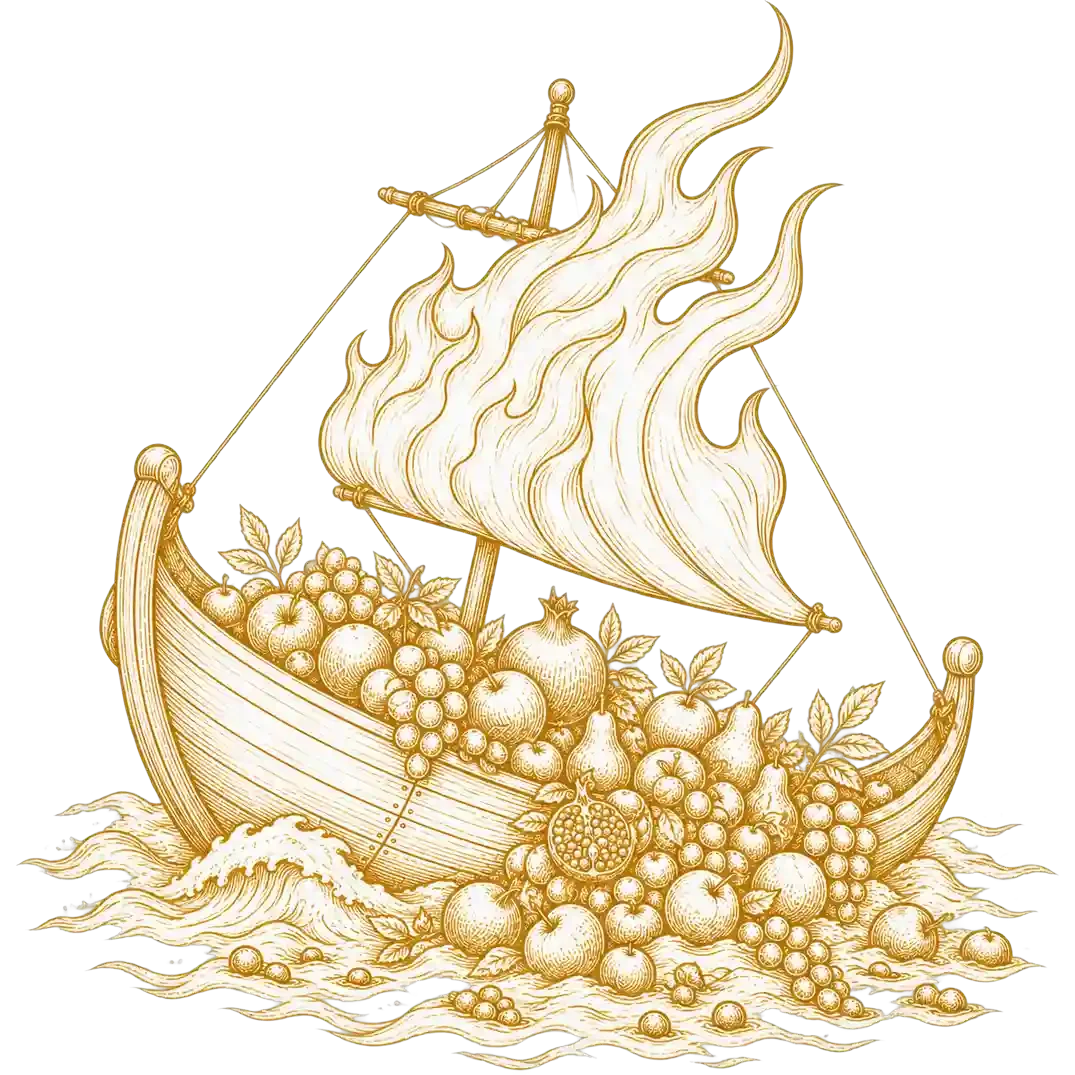
Story: The Hupomeno Tree
There was once a young couple by the names of Hepzivah and Barrett, who had recently been married. They lived in a land of sword-fighters, men and women alike. Everything involved the sword, from their meals to their weddings to their funerals to their schools. Their wedding was something of a cultural event in their circles, friends and family, the better half of a thousand in attendance. The two on their own had already established themselves as the well-rooted saplings that would become the oaks of the future in the community. One thing was sure, with their start, they could not fail. They were to receive the torch from the old and carry the guiding light for the young. None thought ill of them. None doubted them. The wedding was grand and all returned home encouraged by the possibilities of their future, looking forward to the things they would soon accomplish with the sword.
Shortly after they were married, in a strange turn of fate, something would happen which would drastically alter not only the course of their lives, but the lives of many others. Barrett had never lost a battle. It mattered little that he had rarely fought outside of his own town, when it came to swordplay, he was the best in that little land. None could wield a blade with the same delicacy or ferocity, and Barrett often begged that one would be found to match him. One day, all in one day, his prayer was answered.
In the morning, there came an elderly man over the hill facing East. As he mounted the hill, the sun rose behind him, casting a long shadow. Barrett rarely turned East, often too consumed with the sword to look. But today he turned and saw a man who might pose some challenge to his skill. As the man from the East continued his path, his shadow loomed, washing over Barrett and Hepzivah’s little home. Eventually, he arrived.
Barrett went out to meet him, sword in hand.
“Your name?” Barrett asked, sizing up the man.
The man from the East was only silent. Slowly, he drew his sword. What happened next is not much worth mentioning. That morning, Barrett learned the truth. He was nothing. All his skill, all his practice and training, all his obsession had been as a blade of grass against a raging volcano. The man he had asked to meet, to contend with, had come. And that man had crushed Barrett as a boulder might crush a small tree. The morning passed into mid-day, and while Barrett sat, his mind reeling, he looked down into the valley near his home. What he saw this time was the same thing he saw every day: men and women training, swords clashing and clanging, sweat poured and even blood spilt on occasion. Men and women he had defeated time and time again.
While before Barrett’s only thought would be to see if anyone had managed to become a formidable opponent, now he only saw people swinging swords in whatever way they saw fit. He knew swordplay was an art and a science. There were right and wrong ways of going about it. But even many of his instructors in the valley had disagreed on what those right and wrong ways were. Whatever the man from the East had just done, it had mirrored that lovely unity of art and science that reflects life! Such a careful yet grand balance, the chaos of beauty with the tranquility of order. Though Barrett hesitated to admit it, he had just come face to face with the smith who had forged the sword and had himself choreographed the dance to accompany it. In the valley, all he saw were children playing. A certain kind of darkness came over Barrett, like the darkness that covers a seed buried in the soil.
As mid-day passed into evening, Barrett returned home and, to the great shock of his already waning constitution, he found a little girl. Hepzivah had found her that day and brought her home for them to raise. Here, Barrett came to a critical point. He looked at the little girl and thought of all he had planned to teach his children, all he had planned to give them, all they would accomplish with his guidance. And Barrett knew. He knew it was nothing. No matter what master he might have teach them, he would have to tell this child the master was wrong in somethings which that master was certain were right. And no matter what things Barrett believed to be right, some master would believe them wrong. He had one choice, he must travel East.
As Barrett prepared for that journey, the darkness that had been over him remained and soon took Hepzivah in as well. Hepzivah had been the best of the women with the sword, even better than most men, but she had never beaten her husband. That darkness seemed to have no end. In that darkness, Hepzivah and Barrett would battle. In the end, as it always is in marriage, both lost. One may as well attack their own body. Hepzivah would have had Barrett remain and continue under the masters in the valley, Barrett would have Hepzivah come with him. There these two remained a long time, seeds in the dark of the soil, under the ever present weight of a boulder.
What they did not know then, but has been made evident now, is that the death they were suffering was not the end but the beginning. They were on a journey through that chasm that spans between death and new life. Between the seed and the sapling.
One day, the sun rose and pierced that darkness. Both Barrett and Hepzivah turned, the light reaching their eyes for the first time in so long. Each together facing East. And together, with their daughter, they decided to make the journey. To bear the weight of loss. The loss of what they had known. The loss of those they had known. The loss of what they had had. The loss of all things. They resolved to carry the weight of that loss to the East, as one. In what can only be described as a miracle, two saplings became one and grew up from under a boulder, lifting it into the air.
After having arrived in the East, meeting the swordmaster Barrett had faced so long ago, they entered his land. There they learned the dance of the sword and became well-trained themselves. But, strangely, in that land the sword was not the center of people’s lives. Rather, it was the swordmaster. And there was peace.
While living in that distant land, the weight of their loss grew, sometimes seeming nearly unbearable. The swordmaster came and shared with them a prophecy.
“The weight you carry is not for its own sake, but to make you ready. One day, when you are strong enough, you will join me as sword-master. We will be one in the dance. Until that day, bear the weight, knowing that what comes after will be worth far more than any loss.”
In the East, those saplings kept growing. Each day, more completely one. Each day, more fully helping the other bear the weight. Each day, growing. Always looking forward to the day that the stone boulder would be made precious gold.
In Caritate Christi Requiesce
